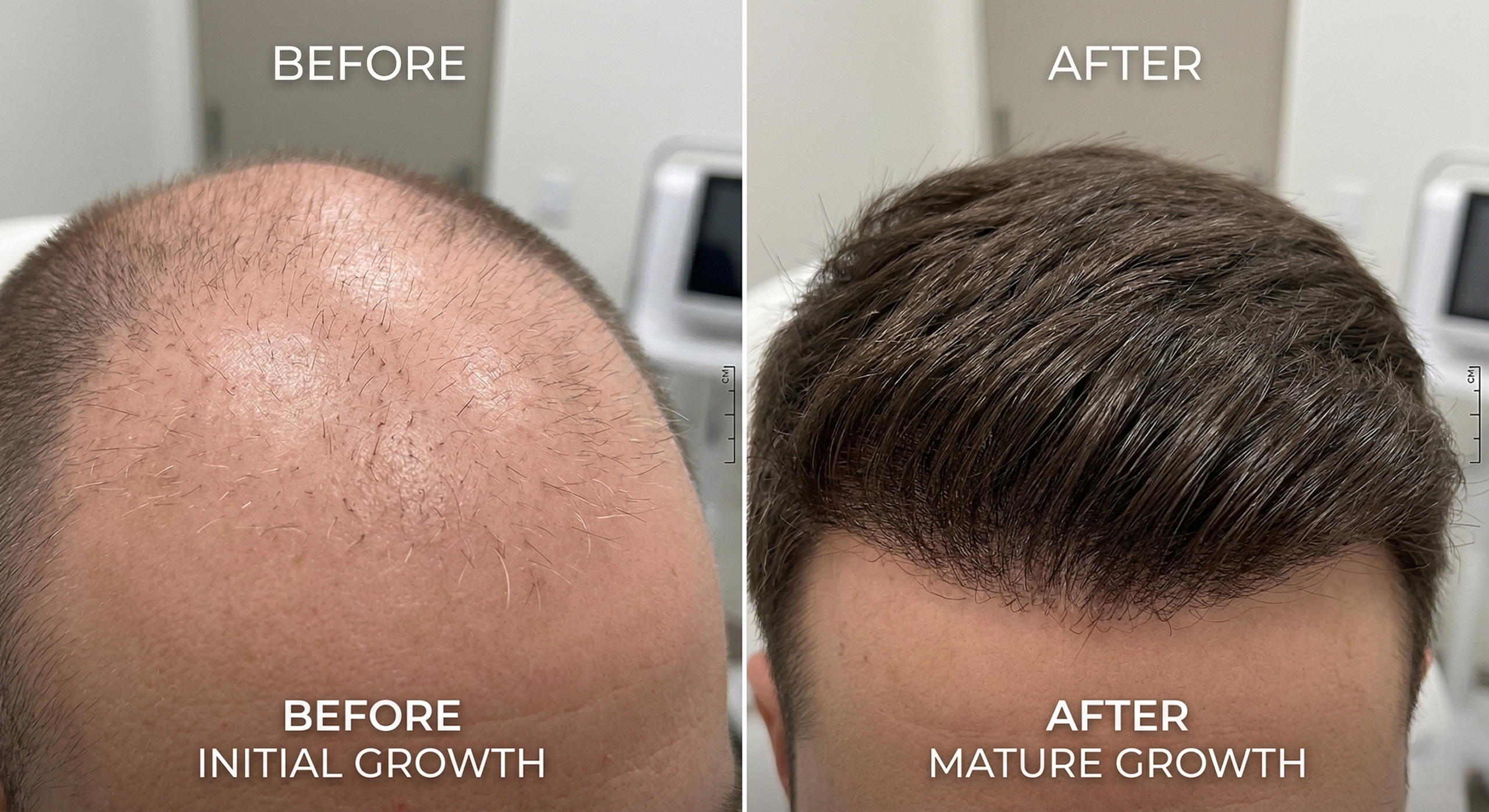
Choosing to undergo a hair transplant is an exciting decision, promising a permanent solution to hair loss. However, patients often enter the process expecting immediate results. The reality of hair transplantation is that it is an exercise in patience.
Achieving a dense, natural-looking head of hair takes time. Understanding the biological timeline of graft healing and hair growth is essential for peace of mind. Here is a detailed guide to what you can realistically expect from your hair transplant before and after the procedure.
The immediate aftermath of a hair transplant is primarily focused on scalp healing and ensuring the newly implanted grafts survive.
Days 1 to 5: Your scalp will exhibit redness, mild swelling, and small scabs around the recipient and donor areas. The grafts are incredibly fragile during this window. Following the clinic’s strict washing protocols is mandatory to prevent dislodging them.
Days 6 to 14: The swelling subsides, and the scabs begin to gently wash away, revealing the short, newly implanted hairs. By day 10 to 14, the grafts are fully rooted and secure in the scalp. Many patients feel a false sense of victory here, seeing the exact outline of their new hairline.
This is psychologically the most challenging phase for many patients, but it is a completely normal part of the process.
Between weeks 3 and 8, the newly implanted hairs will begin to shed and fall out. This phenomenon is known as “shock loss.” The trauma of the extraction and implantation process temporarily cuts off the blood supply to the hair shaft, causing the follicle to shed the existing hair and enter a resting phase.
Do not panic. While the hair shafts fall out, the vital root (the follicle) remains safely anchored beneath the skin, preparing to generate a brand new, healthy hair.
Around the 3-to-4-month mark, the dormant follicles begin to wake up.
Early Growth: You will start to see fine, thin hairs pushing through the scalp. Initially, these hairs may lack pigmentation and appear baby-fine.
Uneven Sprouting: Growth at this stage is rarely uniform. Some areas may sprout faster than others, leading to a temporary patchy appearance.
Month 6 Milestone: By the sixth month, you should see about 40% to 50% of your final result. The hair begins to thicken, darken, and blend with your native hair, allowing you to start styling it.
The second half of your recovery year is where the true transformation occurs.
Thickening: The hairs that sprouted early will continue to thicken in diameter, significantly improving the overall density of the transplanted area.
Textural Changes: Newly transplanted hair sometimes grows in with a slightly different texture (wiry or curly). During months 7 to 12, the hair will soften and normalize to match your natural hair texture.
Month 12: For most patients, the 12-month mark represents the final result, with 90% to 100% of the grafts producing mature, healthy hair.
(Note: For crown transplants, the timeline can extend up to 18 months, as blood circulation in the crown area is naturally lower, slowing the growth process).
While the surgeon’s skill determines the foundation of your result, your post-operative care plays a critical role in maximizing growth.
To ensure the best possible “after” photo:
Follow Aftercare Instructions: Adhere strictly to the clinic’s guidelines on sleeping, washing, and sun exposure.
Medical Therapies: Many clinics recommend using Minoxidil, Finasteride, or undergoing PRP (Platelet-Rich Plasma) therapy post-op. These treatments accelerate growth and protect your remaining native hair from future loss.
Healthy Lifestyle: A balanced diet rich in vitamins, staying hydrated, and avoiding smoking (which constricts blood vessels) will fuel healthy follicular growth.
A hair transplant is a permanent, life-changing procedure, but it requires an understanding of the body’s natural healing timeline. By mentally preparing for the initial shedding phase and remaining patient through the gradual maturation of the hair, you can look forward to a natural, dense result that lasts a lifetime.